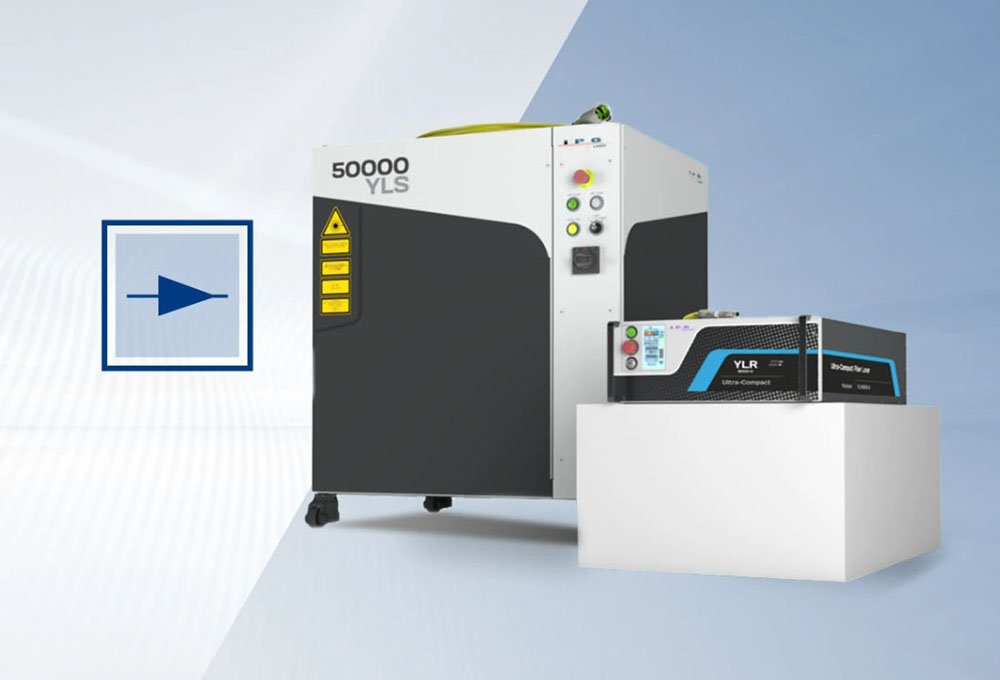
The industrial laser market is undergoing a fundamental transformation. For years, 6kW fiber lasers were considered the workhorse of heavy industrial cutting and welding. Today, that baseline is shifting rapidly. Systems rated at 20kW, 30kW, and even 60kW are becoming increasingly common in sectors ranging from electric vehicle battery manufacturing to heavy-plate structural steel cutting .
For laser manufacturers, machine builders, and component distributors—this power escalation creates both opportunity and risk. The physics of high-power laser transmission place entirely new demands on the consumables ecosystem. Protective lenses, focusing optics, and delivery fibers that performed adequately at 6kW often fail prematurely when subjected to 20kW+ power densities.
This article examines the technical and commercial implications of the shift toward higher-power fiber lasers, with a particular focus on how it reshapes requirements for laser lenses and other critical consumables.
The Driving Forces Behind High-Power Adoption
Several structural trends are accelerating the adoption of high-power fiber laser systems:
Heavy Industrial Applications. The push for faster cutting speeds and the ability to process thicker materials has driven demand for lasers above 6kW. Shipbuilding, aerospace, and construction equipment manufacturers are adopting 20kW–60kW systems to achieve single-pass cutting of heavy steel plate.
Electric Vehicle Manufacturing. Battery pack and module assembly lines represent the fastest-growing application segment for high-power fiber lasers. Welding battery components requires precise, high-energy delivery with minimal thermal distortion—a task that demands both high power and exceptional beam quality.
Installed Base Growth. China alone now houses hundreds of thousands of fiber laser systems, with the high-power segment (>6kW) projected to account for over half of replacement market value by 2026 . Every new installation creates a recurring consumables demand stream.
How High Power Changes Consumable Requirements
✅ Laser Lenses: Higher Power, Higher Standards
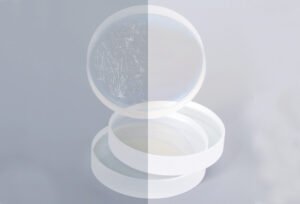
The laser lens—whether a focusing lens, collimating lens, or protective window—is the critical interface between the laser source and the workpiece. At power levels above 6kW, conventional optical components face challenges that fundamentally alter their specifications .
Thermal Management Becomes Critical. At high power densities, thermal lensing—the deformation of the lens surface due to heat absorption—can shift the focal point and degrade cut quality. Suppliers are now integrating thermal management features, including water-cooling channels and embedded temperature sensors, into lens assemblies .
Coating Requirements Escalate. Anti-reflective coatings must maintain transmission above 99.6% while withstanding laser-induced damage thresholds (LIDT) that exceed 10MW/cm² for continuous-wave operation . For ultra-high-power systems (12kW+), premium-grade coatings with documented batch-to-batch consistency command pricing power that standard-grade lenses cannot achieve .
Substrate Quality Differentiates Suppliers. High-purity fused silica and CVD zinc selenide (ZnSe) remain the substrates of choice for high-power optics. However, China remains a net importer of these materials, with lead times of 10–16 weeks for premium grades. This creates a strategic supply chain bottleneck that favors suppliers with established relationships and inventory buffers.
✅ Protective Windows and the Replacement Cycle
Protective windows—the sacrificial elements that shield the optical train from spatter and debris—face accelerated replacement intervals at higher power levels. Job shops running high-duty-cycle 20kW+ systems report replacement needs every two to three months, roughly half the interval for 6kW systems .
For distributors and procurement professionals, this means:
- Higher unit volume of protective windows, particularly in sizes such as 37mm × 7mm for up to 30kW systems
- Greater emphasis on damage threshold specifications when sourcing
- Opportunities for aftermarket service models, including scheduled replacement programs
✅ Delivery Fibers and Power Transmission
Power delivery fibers—the passive cables that transmit laser energy from the source to the processing head—face similar pressures. High-power continuous-wave cutting and welding demand large-core, low-loss fibers with high damage thresholds and low bend sensitivity. The global power delivery fiber market is projected to grow at a CAGR of 6.2%, with gross margins in the 48–65% range.
Commercial Implications for B2B Stakeholders
✅ For Laser Manufacturers and System Integrators
The shift to high power changes the calculus of system design. Optical components must be specified for thermal stability, not just transmission efficiency. Leading integrators are beginning to standardize on lens assemblies with embedded monitoring and cooling—a trend that raises barriers to entry for component-only suppliers.
✅ For Component Distributors and Aftermarket Suppliers
The consumables market is becoming increasingly bifurcated:
| Power Segment | Market Dynamics | Supplier Strategy |
|---|---|---|
| Sub-1kW (marking) | Commoditized, severe price pressure | Volume play, low margins |
| 4–6kW (volume workhorse) | Domestic suppliers gaining share | Cost-competitive, adequate quality |
| 6–12kW (growth battleground) | Domestic vs. international competition | Quality differentiation, documented LIDT |
| 20kW+ (ultra-high-power) | Premium pricing, imported substrates | Technical leadership, reliability |
For distributors serving the high-power segment, the value proposition shifts from price to total cost of ownership. End users prioritizing process stability and reduced downtime will pay premium prices for consistently high-performance optics.
✅ For Equipment Manufacturers and Job Shops
For end users, the math is clear: premature lens failure costs far more than the lens itself. A single unexpected downtime event on a 30kW cutting system can erase the savings from using lower-grade consumables many times over. This is driving a shift toward lifecycle-based procurement rather than spot purchasing.
Technical Considerations for High-Power Lens Selection
B2B buyers sourcing high-power laser lenses should prioritize the following specifications:
Laser-Induced Damage Threshold (LIDT). For continuous-wave lasers above 10kW, look for LIDT ratings exceeding 10MW/cm². For pulsed or ultrafast applications, ensure pulse-damage resistance specifications are provided.
Transmission Efficiency. Premium-grade optics achieve total transmission above 97%, with reflection below 0.2% per surface. Absorption should be below 5 parts per million.
Substrate and Coating Consistency. Batch-to-batch uniformity is as important as the initial specification. Leading suppliers maintain documented quality control checkpoints, including first-article inspection and batch traceability.
Thermal Compensation. For systems above 15kW, consider lenses with integrated cooling channels or materials with low thermal expansion coefficients.
Conclusion
The shift toward higher-power fiber lasers is not merely a trend—it is a structural transformation that will reshape the consumables market for years to come. For B2B suppliers, the winners will be those who:
- Invest in premium coating and substrate technology to serve the growing ultra-high-power segment
- Develop thermal management capabilities beyond simple optical design
- Build aftermarket service models that lock in recurring revenue
- Differentiate on documented reliability rather than price alone
For buyers, the message is equally clear: as power levels rise, the cost of cutting corners on consumables rises with them. In the high-power era, the lens is no longer just a part—it is a strategic investment in productivity.