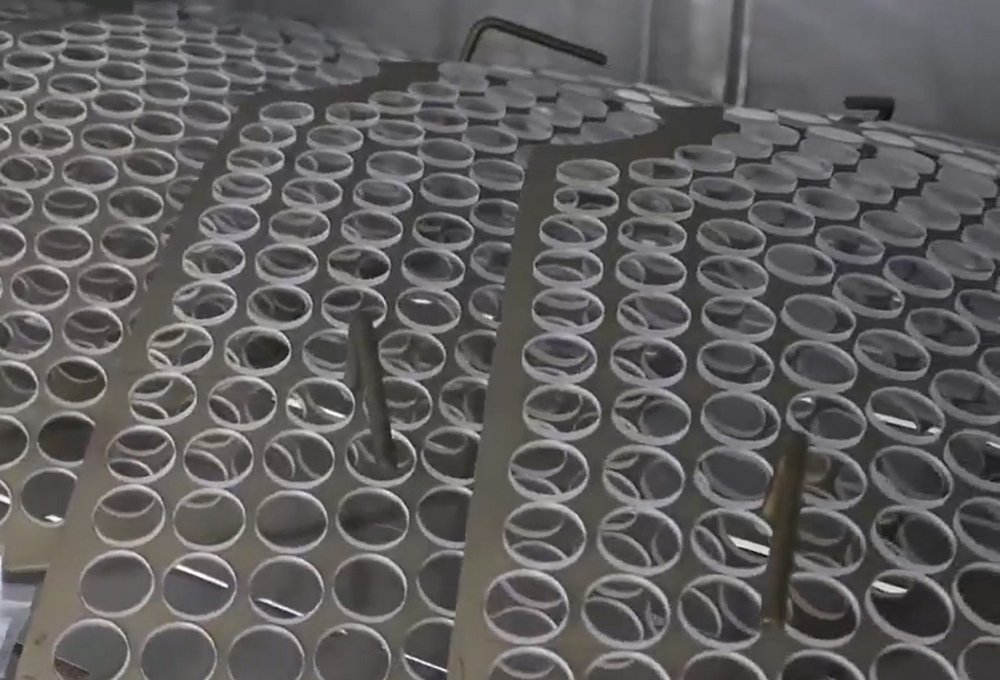
In precision manufacturing, the quality of laser consumables—lenses and nozzles in particular—directly determines operational efficiency, output quality, and ultimately, profitability. While low-cost alternatives may appear attractive for B2B procurement, the hidden costs of using substandard components often far outweigh any initial savings.
For laser manufacturers, equipment suppliers, and parts distributors, understanding these risks is critical to making informed sourcing decisions and delivering value to end customers.
Introduction: The True Cost of a "Bargain"
When a laser cutting system underperforms, operators often look to the machine itself as the culprit. However, the root cause frequently lies in two small but essential components: the protective lens and the nozzle.
Lenses and nozzles work together to focus the laser beam and direct assist gas onto the workpiece. A high-quality lens ensures precise beam transmission and focus, while a well-machined nozzle maintains consistent gas flow and protects the optics from debris . When either component is compromised by poor quality, the consequences ripple across productivity, maintenance, and product quality.
Laser Lens Quality Issues: Beyond the Surface
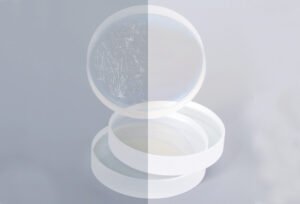
The protective lens, also known as the window lens, serves as the first line of defense for the laser optics. Its quality—determined by material purity, coating integrity, and surface finish—directly impacts performance.
Contamination and Burn Damage
Low-quality protective lenses are prone to contamination from smoke and debris generated during cutting. Without proper cleaning or with inferior anti-reflective coatings, these lenses quickly develop burn marks that are impossible to remove . A burned or scratched lens cannot transmit the laser beam effectively, leading to power loss and inconsistent cutting results.
Inner Lens Degradation
Beyond the protective lens lies the inner focusing lens. This component is even more expensive to replace because it is often integrated into the laser module. When contaminants bypass a degraded protective lens, they can damage the inner lens, requiring costly replacement of the entire laser module in some machine designs
The Cost of Frequent Replacement
Cheap lenses degrade faster, requiring replacement as often as every hour under heavy workloads in unfavorable environments . In contrast, high-quality optics with durable coatings can last significantly longer. For B2B operations running multiple shifts, this difference in lifespan translates directly to higher consumable expenses and more frequent downtime for maintenance.
Low-Quality Laser Nozzle Problems
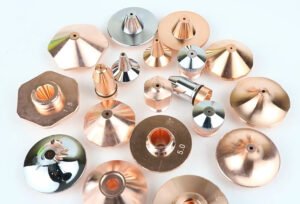
The nozzle plays an equally crucial role in cutting performance. It must precisely direct assist gas onto the cut zone and protect the lens from back-splatter. Poor-quality nozzles introduce multiple problems.
Dross Formation and Poor Edge Quality
One of the most visible signs of a low-quality nozzle is increased dross formation—the accumulation of molten material on the bottom edge of the cut. When the nozzle’s inner diameter or concentricity is off-spec by even a fraction of a millimeter, the gas flow becomes turbulent, failing to eject molten material cleanly . The result is rough edges requiring secondary finishing, costing time and labor.
Premature Wear and Frequent Replacement
Low-cost nozzles often use inferior copper alloys that warp under high thermal loads, while premium versions use oxygen-free copper with polished interiors for better thermal stability . Warped or eroded nozzles cannot maintain the correct standoff distance or gas flow pattern, reducing cutting speed and quality. In high-utilization environments, investing in higher-grade nozzles extends service intervals and reduces replacement frequency.
Clogging and Lens Damage
When dust accumulates in the air nozzle, the laser beam can reflect off the debris and damage the lens itself . This creates a vicious cycle: a clogged nozzle damages the lens, and a damaged lens further degrades cutting performance, requiring more frequent maintenance and parts replacement.
Gas Flow Inefficiency
Proper nozzle design is not just about mechanical fit—it also affects gas consumption. An inferior nozzle cannot direct assist gas as efficiently, increasing gas usage for the same cutting task. Over time, this adds significant expense to the operating cost structure.
The Hidden Costs: A Financial Breakdown
When B2B decision-makers evaluate component quality, the focus often falls on the unit price. But the real cost equation is more complex.
✅ Downtime
Every minute a laser cutter sits idle while operators clean or replace lenses and nozzles is lost revenue. If low-quality consumables require hourly cleaning and frequent replacement, downtime compounds rapidly across multiple.
✅ Scrap and Rework
Inconsistent beam focus caused by degraded optics leads to rejects and rework. For high-value materials, the cost of scrap can quickly surpass the cost of upgrading to quality components.
✅ Customer Satisfaction
For laser manufacturers and equipment suppliers, end-product quality directly affects reputation. A machine that fails to deliver clean cuts due to poor-quality consumables reflects badly on the entire system—regardless of the machine’s design. Distributors who supply low-quality consumables risk losing customer trust and repeat business.
The Sourcing Paradox: Aftermarket vs. OEM
The market is flooded with low-cost aftermarket lenses and nozzles. Some are manufactured with genuine engineering expertise and strict quality control; others are produced with no regard for tolerances or materials.
OEM suppliers emphasize that their components are designed to match the machine’s exact specifications. Some laser nozzles, for example, are built from proprietary designs specifying the chemical composition of the tip and cone curvature to ensure optimal cutting performance . Replacing OEM nozzles with aftermarket models that are not to specification can significantly reduce cutting capabilities and lead to service issues .
However, not all aftermarket alternatives are inferior. China’s Yangtze River Delta region has emerged as a hub for precision laser components, with suppliers offering CNC-machined nozzles with micron-level accuracy, compatible with major brands like Precitec, Raytools, and WSX . These suppliers maintain strict quality inspection standards and can provide dimensional drawings with ±0.01mm tolerance specifications .
For B2B procurement professionals, the key is supplier evaluation—not automatically rejecting aftermarket options, but thoroughly vetting them for technical capability, material certifications, and operational reliability.
A Sourcing Framework for Quality-Conscious B2B Buyers
When evaluating laser lens and nozzle suppliers, consider the following criteria:
✅ Technical Compatibility
- Request detailed dimensional drawings for nozzles, including inner diameter and thread pitch specifications.
- For lenses, ask for transmittance test reports under continuous operation at your operating wattage .
- Verify the material grade—oxygen-free copper for nozzles, AR-coated ZnSe or fused silica for lenses.
✅ Quality Assurance
- Look for ISO 9001-certified workflows and inspection reports covering concentricity, surface finish, and thermal resistance testing.
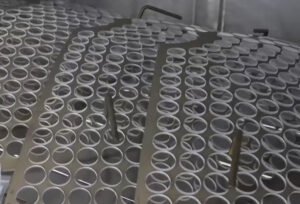
- Suppliers with cleanroom assembly lines for optical components typically demonstrate higher quality standards.
✅ Operational Reliability
- On-time delivery rates above 95% indicate robust production and inventory planning.
- Fast response times (under 2 hours) signal dedicated customer support teams.
- High reorder rates (above 25%) suggest consistent quality and customer satisfaction.
✅ Real-World Validation
- Start with sample validation before committing to bulk orders.
- Test component lifespan under actual operating conditions—measure kerf width consistency, dross formation, and wear after 50 hours of operation.
Conclusion: Quality as a Differentiator
For B2B buyers in the laser industry—whether manufacturing equipment, distributing parts, or operating cutting services—the hidden costs of low-quality lenses and nozzles are a silent profit drain. The price difference between a $0.66 nozzle and a $3.15 nozzle may seem significant on a purchase order . But when factoring in downtime, scrap, rework, and lost customer confidence, the “savings” evaporate.
Investing in high-quality consumables, sourced from technically competent suppliers with proven reliability, ensures consistent performance, lower total cost of ownership, and stronger customer satisfaction. For laser manufacturers and equipment suppliers, it also protects your brand reputation—a valuable asset that low-cost components can tarnish.
The best B2B partnerships are built on trust and performance. Choosing quality lenses and nozzles is not just an operational decision—it’s a strategic commitment to delivering value to your customers and sustaining long-term growth.