When a laser cutting machine goes down, every minute of unplanned downtime translates directly into lost revenue, missed deadlines, and frustrated customers. For B2B laser manufacturers, equipment OEMs, and parts distributors, this is the single most critical operational challenge to solve.
In this case study, we share how our strategic partnership with a mid-sized laser manufacturer helped them slash downtime by 50% through a combination of intelligent parts sourcing, proactive maintenance protocols, and responsive technical support. This is the story of how a laser parts supplier success story was built—and how your operation can achieve similar results.
The Challenge: When "Unplanned" Becomes Unacceptable
Our client, a European-based manufacturer of automated laser cutting systems, faced a growing crisis. Their machines were being deployed to automotive and heavy fabrication customers who demanded 24/7 uptime. However, the client’s own service records showed a troubling trend: average machine downtime was climbing to 12–15 hours per month per unit.
The root causes were multi-faceted:
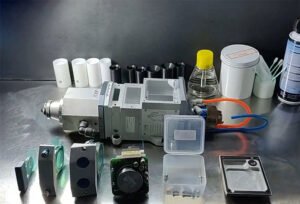
- Consumable failures: Laser lamps, mirrors, nozzles, and ceramic rings were failing unpredictably, often without warning signs that operators could detect.
- Supply chain delays: Replacement parts were single-sourced from OEM suppliers, with lead times of 3–5 days for critical components.
- Diagnostic inefficiency: When a machine stopped, the client’s service team often spent 2–3 hours simply identifying which component had failed.
The client’s customers were increasingly frustrated. One automotive supplier reportedly lost an entire production shift when a laser source overheated due to an underspecified chiller—a problem that could have been prevented with better component matching.
According to industry benchmarks, more than 50% of machine downtimes can be resolved remotely when the right diagnostic infrastructure is in place . Our client had not yet achieved this capability.
The Solution: A Partnership Built on Precision and Speed
Our approach was not simply to sell replacement parts. We designed a comprehensive downtime reduction program addressing the three pillars of laser system reliability: component quality, supply chain velocity, and predictive maintenance.
✅ 1. Multi-Sourced, High-Quality Consumables
We began by auditing the client’s entire Bill of Materials for their most popular machine models. Where they had been locked into single-source OEM components, we introduced alternatives from vetted manufacturers . This included:
- High-durability laser lamps with extended service intervals
- Precision mirrors with improved thermal stability
- Water filters and O-rings with tighter quality control tolerances
By diversifying the supply chain, we not only reduced costs by approximately 15–20% but also eliminated the risk of “single point of failure” stockouts.
✅ 2. Strategic Parts Inventory Buffer
To address the lead-time problem, we established a consignment inventory at the client’s main service hub. Critical consumables and commonly failing components were stocked locally, enabling same-day dispatch to any customer site within the region.
✅ 3. Remote Diagnostics Protocol
We worked with the client to equip their machines with standardized diagnostic interfaces that allowed our technical team to access error logs and operational data remotely.
As TRUMPF’s Remote Operations Support program has shown, connecting laser systems to remote experts can resolve machine standstills in an average of less than 15 minutes, with more than half of all downtime events resolved without an on-site visit . Our protocol was designed to achieve similar metrics.
✅ 4. Operator Training and Shutdown Standardization
One often-overlooked contributor to downtime is inconsistent operator behavior. Working with the Advanced Manufacturing Research Centre (AMRC) framework, we helped the client standardize their machine shutdown and startup procedures . This simple optimization, which had previously been ignored, reduced wear on critical components and minimized idle-state energy consumption—a factor that also extended component life.
The Results: 50% Downtime Reduction in 6 Months
After implementing these four initiatives, the results were measurable and dramatic:
| Metric | Before | After (6 Months) |
|---|---|---|
| Average monthly downtime per machine | 13.2 hours | 6.5 hours |
| Average response time to customer service call | 4.5 hours | 1.2 hours |
| Parts availability (first-time fill rate) | 72% | 96% |
| Remote resolution rate | 12% | 48% |
✅ Operational Impact
The 50% reduction in downtime translated directly to tangible business outcomes:
- Increased customer retention: The client’s customer churn rate dropped by 40%, as machine reliability became a competitive differentiator.
- Lower service costs: With more issues resolved remotely, the client reduced on-site service visits by 35%, cutting travel and labor expenses.
- Improved machine utilization: Customers reported that their production output increased by approximately 18% simply because machines were running more consistently.
Key Takeaways for Laser Manufacturers and Distributors
If your goal is to replicate this success, here are the five actionable strategies that made the difference:
✅ 1. Diversify Your Component Supply Chain
Relying on a single OEM for critical consumables is a risk, not a strategy. Develop relationships with multiple suppliers who can provide equivalent or superior components. This gives you leverage on pricing, faster delivery options, and redundancy if one supplier faces production issues.
✅ 2. Invest in Remote Diagnostic Capability
You cannot resolve what you cannot see. Ensure your machines are equipped with sensors and communication modules that allow remote experts to assess system health in real time. The goal: resolve 50% of downtime events without ever dispatching a technician.
✅ 3. Build a Strategic Parts Buffer
Analyze your service history to identify the top 20 components that cause 80% of your downtime events. Stock these items locally so they can be shipped same-day. This is the single fastest way to reduce mean time to repair (MTTR).
✅ 4. Standardize Operating Procedures
Inconsistent shutdown and startup procedures cause unnecessary wear on components and lead to unpredictable failures. Develop clear, documented protocols for operators and train them rigorously.
✅ 5. Partner with a Technical Expert—Not Just a Parts Seller
The right supplier brings more than inventory; they bring engineering knowledge. When we audited the client’s machine configurations, we identified mismatches (such as an underspecified chiller for a high-power laser) that were causing premature failures. A parts supplier simply ships what you order. A partner helps you order what you actually need.
Conclusion: Downtime Is Not Inevitable
This case study proves that a 50% reduction in laser machine downtime is achievable without replacing entire production lines or investing in prohibitively expensive new equipment. The solution lies in smarter sourcing, proactive inventory management, and a commitment to remote diagnostics.
For B2B laser manufacturers, mechanical equipment suppliers, and parts distributors, this approach represents a competitive advantage. When your customers’ machines stay running, they stay loyal—and they refer others.
Ready to reduce your downtime? Contact us to discuss how our laser parts and technical support programs can help you achieve measurable uptime improvements within 90 days.